

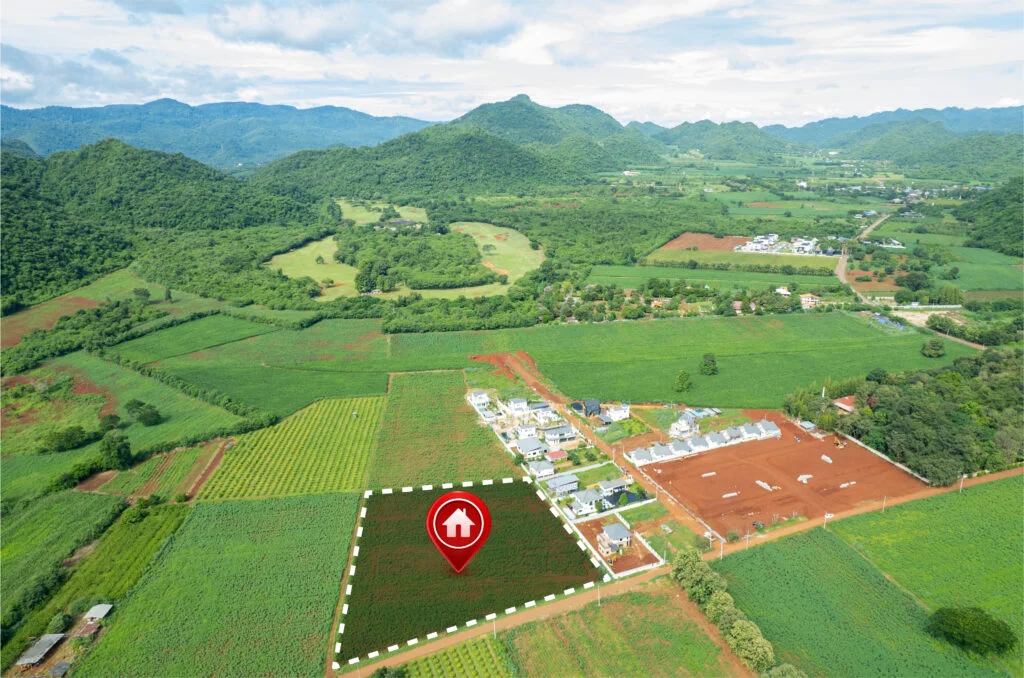
Lagos Property Investment Guide: Land Banking vs Developed Estates
Introduction
In the ever-evolving Lagos real estate market, investors are constantly faced with one critical question:
Should I invest in undeveloped land (land banking) or buy into developed estates?
Both options present lucrative opportunities — but they differ in cost, timing, legal structure, and return on investment (ROI).
While land banking allows investors to buy large portions of land early for future appreciation, developed estates provide immediate utility, infrastructure, and security.
The right choice depends on your financial goal, risk appetite, and investment timeline.
This guide provides a detailed, legally sound, and market-informed comparison between land banking and developed estate investment in Lagos, including how to calculate returns, identify genuine opportunities, and secure your investment under Lagos property law.
1. Understanding Lagos Real Estate Investment Landscape
Lagos remains Nigeria’s property investment capital, accounting for over 60% of national real estate transactions.
With its booming population, infrastructural development, and rising middle-class demand, property values in Lagos continue to appreciate steadily year after year.
The two dominant investment models are:
- Land Banking: Buying undeveloped land in emerging areas for long-term appreciation.
- Developed Estate Investment: Buying serviced plots or completed units within planned communities.
Both are profitable when done legally and strategically.
2. What is Land Banking?
Land banking involves acquiring large or undeveloped land at a relatively low price and holding it for resale or development as the area grows.
It is similar to financial savings — but instead of keeping cash in a bank, you “bank” it in real estate.
Characteristics:
- No immediate infrastructure.
- Long-term value growth.
- Low entry cost.
- Higher risk, higher potential return.
3. What Are Developed Estates?
Developed estates are planned residential or commercial communities with existing infrastructure such as:
- Roads and drainage systems,
- Electricity and water,
- Security and estate management.
They often have serviced plots or finished houses ready for occupation or resale.
Characteristics:
- Higher entry cost.
- Immediate usability and rentability.
- Lower risk, stable return.
4. The Legal Dimension of Both Investments
Before committing funds, every investor must understand the legal framework regulating property transactions in Lagos.
Relevant Laws:
- Land Use Act (Cap L5, LFN 2004) – Governs ownership and Governor’s Consent.
- Land Registration Law of Lagos State (2015) – Regulates registration and perfection.
- Lagos State Properties Protection Law (2016) – Protects investors from land grabbers.
- LASRERA Law (2020) – Regulates real estate developers and agents.
- Physical Planning and Urban Development Law – Controls building and layout approvals.
Legal due diligence ensures that both land banking and estate investments remain safe and enforceable.
5. Comparing Land Banking vs Developed Estates
| Criteria | Land Banking | Developed Estates |
|---|---|---|
| Initial Cost | Low | High |
| ROI (5 years) | 40–150% | 20–60% |
| Risk Level | Moderate to High | Low |
| Liquidity | Long-term | Medium-term |
| Maintenance | Minimal | Ongoing |
| Documentation | Excision, Gazette, C of O | Governor’s Consent, Registered Deed |
| Security | Requires fencing/care | Gated and managed |
| Target Investor | Long-term wealth builder | Immediate user or rental investor |
6. Advantages of Land Banking
- High Capital Appreciation:
Early buyers enjoy exponential value growth as development spreads. - Low Entry Cost:
Ideal for young or medium-scale investors. - Flexibility:
Land can be resold, developed, or used for joint ventures. - Minimal Maintenance:
No service charge or infrastructure cost. - Portfolio Diversification:
Hedge against inflation — land always retains value.
7. Risks Associated with Land Banking
- Government Acquisition: Buying unexcised or unapproved land.
- Land Grabbers or Fraudulent Sellers.
- Slow Development: Long waiting time before appreciation.
- Title Uncertainty: Incomplete documentation or pending excision.
These risks are avoidable through legal due diligence and title verification by a competent property lawyer.
8. Legal Due Diligence for Land Banking
- Conduct search at Lagos Lands Registry.
- Verify survey with Office of the Surveyor-General (OSGL).
- Confirm excision or Gazette.
- Check Governor’s Consent status.
- Obtain and register Deed of Assignment.
At Chaman Law Firm, we handle every step — from verification to perfection — ensuring your land remains legally protected.
9. Advantages of Investing in Developed Estates
- Immediate Use:
You can move in, rent out, or resell instantly. - High Rental Demand:
Urban estates attract tenants, corporate clients, and shortlet guests. - Security and Infrastructure:
Gated systems, private management, and utilities increase value. - Predictable ROI:
Regular income through rent and moderate appreciation. - Financing Availability:
Easier to obtain mortgage or developer payment plans.
10. Legal Structure of Developed Estates
Developers operate under:
- Governor’s Consent for Mother Title.
- Layout Approval from Ministry of Physical Planning.
- Survey Registration at OSGL.
- Building and Environmental Approvals.
Investors receive individual Deeds of Assignment or Sub-Lease Agreements, depending on the estate structure.
11. Risks Associated with Developed Estates
- Developer Fraud: Fake or unregistered estates.
- Hidden Fees: Maintenance, infrastructure, and service charges.
- Construction Quality Issues.
- Title Delay: Incomplete individual documentation.
To mitigate this, engage a lawyer before signing any allocation letter or deed.
12. ROI Comparison
| Investment Duration | Land Banking ROI | Developed Estate ROI |
|---|---|---|
| 1 Year | 10–20% | 8–12% |
| 3 Years | 30–80% | 20–40% |
| 5 Years | 60–150% | 40–60% |
| 10 Years | 200%+ | 80–120% |
Land banking gives higher long-term gains, while developed estates deliver steady income flow.
13. ROI Example – Land Banking
Scenario:
An investor purchases a plot in Epe at ₦5 million in 2020.
By 2025, same land sells for ₦15 million. ROI=15M−5M5M×100=200%ROI = \frac{15M – 5M}{5M} \times 100 = 200\%ROI=5M15M−5M×100=200%
Result:
200% ROI over 5 years.
14. ROI Example – Developed Estate
Scenario:
Investor buys a 3-bedroom flat in Lekki for ₦60 million and earns ₦6 million annually from rent. ROI=6M60M×100=10%ROI = \frac{6M}{60M} \times 100 = 10\%ROI=60M6M×100=10%
Result:
10% annual ROI — consistent and sustainable.
15. Financing and Leverage
- Land Banking: Usually cash-based; limited financing.
- Developed Estates: Developers and banks offer mortgage or installment plans.
Leveraging financing increases accessibility but must be calculated against total ROI.
16. Security and Title Integrity
- Land banking requires strong title verification and periodic monitoring.
- Developed estates have centralized management and physical security.
Both can be safe when properly managed through legal channels.
17. Ideal Investors for Each Model
| Investor Type | Best Option | Reason |
|---|---|---|
| Young investors | Land Banking | Low entry cost, long-term gain |
| Diaspora Nigerians | Developed Estates | Managed properties, rent flow |
| Developers | Land Banking | Bulk land for projects |
| Retirees | Developed Estates | Stability and peace of mind |
| Risk-takers | Land Banking | High reward potential |
18. Legal Red Flags to Watch Out For
- Unverified excision claims.
- “Family lands” without registered owners.
- Developers selling without Governor’s Consent.
- No approved layout plan.
Always insist on search results, survey plan, and title verification certificate.
19. Lagos Hotspots for Land Banking
- Epe – Fastest-growing corridor with industrial expansion.
- Ibeju-Lekki – Dangote Refinery, Deep Seaport, and airport projects.
- Badagry – Infrastructure renaissance.
- Ogun-Lagos Border Communities – Affordable, strategic access points.
20. Lagos Hotspots for Developed Estate Investment
- Lekki Phase 1 and Chevron Drive.
- Ajah and Sangotedo (middle-income estates).
- Magodo GRA and Ikeja GRA (mainland luxury).
- Ikoyi and Victoria Island (high-end commercial and residential).
21. Legal Due Diligence Checklist
Before investing:
- Conduct land search at the Lands Registry.
- Verify survey at OSGL.
- Confirm excision or Gazette.
- Request developer’s mother title and layout approval.
- Ensure Deed of Assignment and Governor’s Consent are processed.
- Retain legal counsel (Chaman Law Firm) throughout the process.
22. The Role of Lawyers and Realtors
Lawyers:
- Handle verification, contract drafting, and registration.
Realtors:
- Source and market genuine properties.
A synergy of both ensures safe, profitable, and legal transactions.
23. Chaman Law Firm’s Legal Approach
At Chaman Law Firm, we:
- Verify land titles and developer documents.
- Conduct due diligence and litigation checks.
- Perfect deeds and Governor’s Consent.
- Protect investors from land grabbers and fraud.
Our legal supervision guarantees peace of mind.
24. Chaman Properties’ Investment Advisory Role
At Chaman Properties, we:
- Curate verified land banking opportunities.
- Offer affordable, high-ROI developed estate options.
- Manage investor portfolios.
- Provide ROI reports and resale assistance.
25. Case Study – Dual Investment Strategy
A client purchased:
- 2 plots in Epe (₦10 million).
- 1 flat in Ajah (₦45 million).
After 5 years:
- Epe land appreciated to ₦30 million.
- Ajah flat earned ₦22 million in rent.
Total ROI = 90% combined.
A diversified portfolio gave both growth and stability.
26. Tax Implications
- Stamp Duties on Deed of Assignment.
- Capital Gains Tax on resale profit.
- Land Use Charge for developed property.
Legal and accounting advice ensures compliance and higher net ROI.
27. ROI Forecast (2025–2035)
| Location | Expected Land Banking ROI | Expected Estate ROI |
|---|---|---|
| Epe | 200–300% | 80–120% |
| Ibeju-Lekki | 180–250% | 70–100% |
| Ajah | 120–180% | 60–80% |
| Magodo | 90–120% | 70–90% |
| Lekki Phase 1 | 80–100% | 70–100% |
28. Combining Both Strategies
Smart investors combine land banking and estate investment:
- Land banking secures long-term growth.
- Estates provide immediate returns.
This hybrid model builds wealth continuity and financial liquidity.
29. Common Mistakes to Avoid
- Buying without legal verification.
- Falling for “off-plan” projects without documentation.
- Ignoring Governor’s Consent.
- Delaying registration and possession.
- Overlooking location accessibility.
30. Conclusion
Both land banking and developed estate investment are profitable pathways to wealth creation in Lagos — but success depends on timing, legality, and professional guidance.
Land banking offers exponential growth for long-term investors, while developed estates provide stability, security, and predictable cash flow.
The wisest approach is to combine both under legal supervision to achieve a balanced, high-performing property portfolio.
Call to Action
Are you considering buying land or investing in a developed estate in Lagos?
Our team provides full-spectrum legal and real estate advisory to help you make the right investment decision, backed by due diligence and ROI analysis.
Contact Us
📞 0806 555 3671, 08096888818, 08024200080
📍 Chaman Law Firm 115, Obafemi Awolowo Way Allen Junction, Beside Lagos Airport Hotel, Ikeja, Lagos
👉 Book a consultation now: www.chamanlawfirm.com/book-consultation
