Secure Your Property Dreams: How to Secure Child Support and Maintenance Legally in Nigeria
Introduction
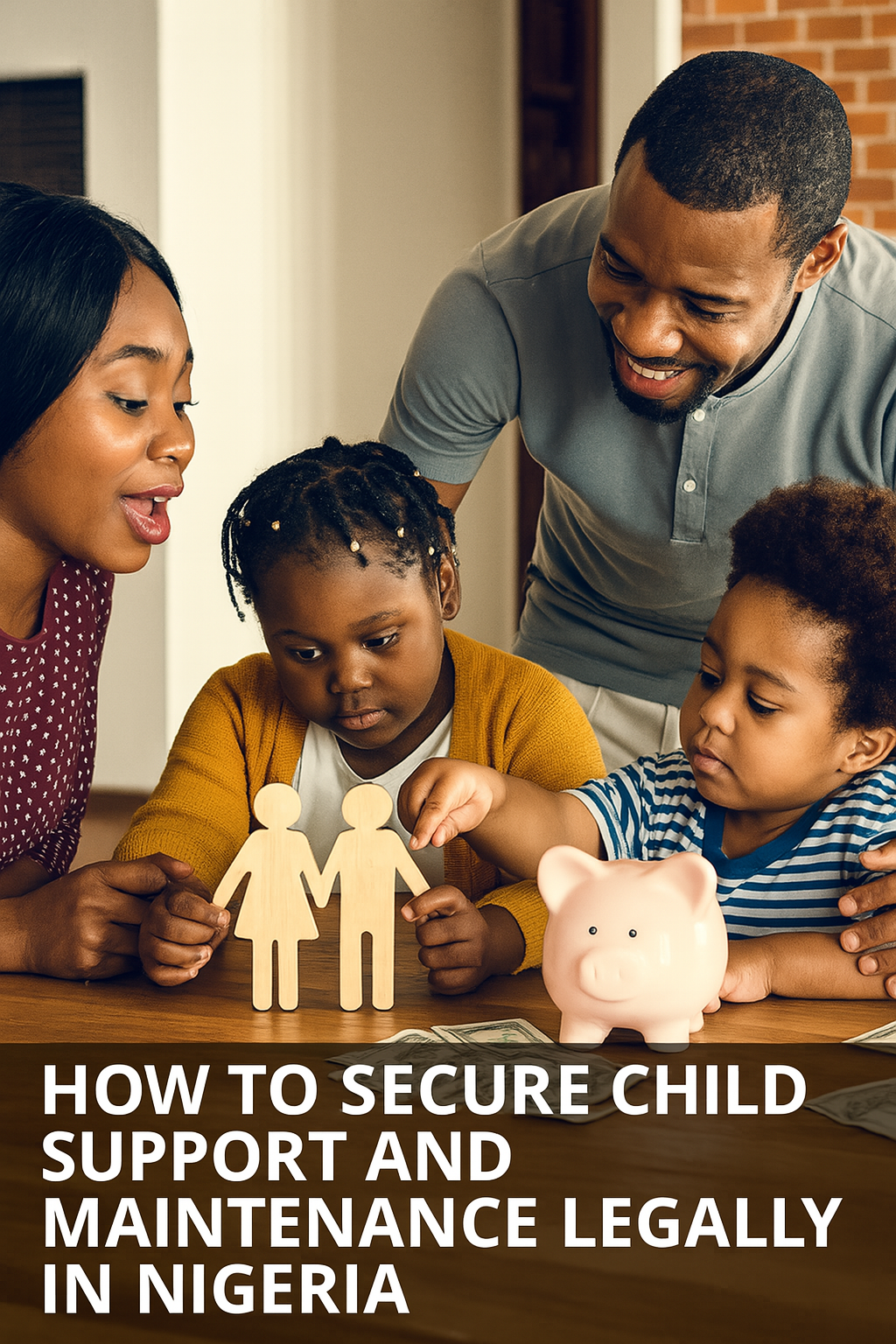
Raising a child is a sacred responsibility, but when a relationship ends—whether in separation, divorce, or even abandonment—the burden of child care often falls unfairly on one parent. In Nigeria, many parents, especially women, struggle to provide food, education, healthcare, and shelter for their children after the other parent absconds or refuses to take financial responsibility. Yet, under Nigerian law, both parents are legally obligated to support their children. This article by Chaman Law Firm explains in detail how to secure child support and maintenance legally, enforce your child’s rights, and hold the defaulting parent accountable under Nigerian family law.
Understanding Child Support and Maintenance in Nigeria
Child support refers to financial contributions made by one parent to another for the care and upbringing of a child following a separation, divorce, or birth outside of marriage. Maintenance is broader and includes all forms of care—financial, educational, emotional, and moral. Nigerian laws recognize the child’s right to parental care and hold both parents responsible, regardless of their marital status.
What the Law Says About Child Support
Several legal provisions govern child support and maintenance in Nigeria:
-
Child’s Rights Act 2003 – Recognizes a child’s right to parental care and protection.
-
Matrimonial Causes Act – Governs child support in cases of divorce or separation.
-
Sharia and Customary Laws – Vary by region but also mandate support for children.
-
Family Court Practice Directions and High Court Rules – Provide for enforcement procedures.
In essence, the best interest of the child is paramount under all legal systems in Nigeria.
Who Can Claim Child Support?
-
A mother or father with custody of the child
-
A legal guardian or caregiver
-
A relative caring for the child in the absence of the parents
-
The child, through a representative (usually a parent or legal guardian)
What Does Child Support Cover?
Child support may include:
-
School fees and educational supplies
-
Medical expenses
-
Feeding and clothing
-
Shelter and accommodation
-
Transportation and other welfare needs
-
Maintenance of the standard of living the child enjoyed before separation
Is Child Support Limited to Married Parents?
No. Child support applies to:
-
Children born in marriage
-
Children born out of wedlock
-
Adopted children
-
Children from cohabitation or informal unions
Every child is protected under the law, and the marital status of the parents is irrelevant in determining support obligations.
Establishing Paternity in Disputed Cases
Sometimes, a man may deny being the father. In such situations:
-
The court can order a DNA test
-
Birth certificates, hospital records, and past relationships may serve as evidence
-
If paternity is established, the father becomes liable for maintenance
A court can compel a man to pay child support even if he never married the child’s mother.
Legal Grounds for Seeking Child Maintenance
You may approach the court when:
-
A parent has abandoned the child
-
A parent has refused to provide support
-
There’s a divorce or legal separation
-
One parent is incapacitated and needs the other to support
-
The child has special needs or health challenges
Courts will always decide based on the welfare and best interest of the child.
How to Apply for Child Support in Nigeria (Step-by-Step)
1. Engage a Family Lawyer
A lawyer will help you:
-
Prepare court documents
-
Gather evidence (bills, communication records)
-
File the appropriate motion or petition
-
Represent you in court proceedings
2. Approach the Family Court
Most states have Designated Family Courts. In Lagos, for example, child support cases are handled by the Family Division of the High Court.
3. File an Application or Petition
This should include:
-
Child’s birth details
-
Evidence of relationship
-
Income details of both parties
-
Child’s needs (education, feeding, rent, etc.)
-
Bank statements, receipts, photos, etc.
4. Court Summons the Respondent
The other parent is served to appear and respond to the claims.
5. Hearing and Determination
The court may conduct hearings and examine:
-
Financial capacity of the parent
-
Lifestyle of both parties
-
Child’s current condition
-
Any neglect or misconduct
Factors the Court Considers in Granting Child Support
-
Age of the child
-
Income and financial status of both parents
-
Educational level of the child
-
Health needs
-
Previous standard of living
-
Number of dependents of both parties
-
Whether the child has special needs
Enforcement of Child Maintenance Orders
Once the court grants an order, the paying parent must comply. Enforcement mechanisms include:
-
Salary garnishment
-
Attachment of bank accounts
-
Seizure of assets
-
Committal to prison for contempt
-
Reporting to employer or community leaders
-
Immigration or travel restrictions (in advanced cases)
What If the Parent Lives Abroad?
You can still:
-
File in Nigeria and serve the documents internationally
-
Request for reciprocal enforcement through international treaties
-
File simultaneously in the country where the parent resides
-
Seek assistance from embassies, NGOs, or family courts abroad
Legal support is essential for cross-border child support enforcement.
Can a Man Also Seek Child Maintenance?
Yes. Men who are:
-
Sole custodians
-
Victims of desertion
-
Caregivers of children
-
Facing financial hardship
can apply for the mother to contribute to the child’s care. Child support is gender-neutral.
Role of Chaman Law Firm in Child Support Cases
We assist clients by:
-
Filing child support or maintenance applications
-
Drafting and registering court-approved Parenting Agreements
-
Enforcing maintenance orders
-
Negotiating settlement and arrears
-
Advising on custody, relocation, and visitation
-
Representing both male and female applicants
Our lawyers have extensive experience in Family Law across Lagos, Abuja, Ogun, and beyond.
Common Challenges in Child Support Enforcement
-
The other parent hides income or changes jobs
-
Informal agreements without court backing
-
Lack of cooperation from extended family
-
Cultural norms that stigmatize single parents
-
Emotional blackmail or threats
-
No centralized enforcement system in Nigeria
These can be overcome with legal documentation, court authority, and firm representation.
Can Child Support Be Adjusted?
Yes. Either parent can apply for variation of the court order if:
-
Financial circumstances change
-
The child’s needs increase (e.g., health or education)
-
One parent becomes unemployed or disabled
-
The custodial parent remarries or relocates
The court will reassess and adjust the payment accordingly.
What If the Paying Parent Dies?
In such cases:
-
The child may inherit from the deceased’s estate
-
A claim can be made through probate proceedings
-
The court may order temporary support from relatives
-
Life insurance (if any) can be claimed on behalf of the child
It is wise to include child support obligations in your Will or estate plan.
Customary and Sharia Law Perspectives
Under Customary Law:
-
Fathers are traditionally seen as financial providers
-
However, many customs exclude daughters or children from “non-customary unions”
-
Courts have ruled such exclusion as discriminatory under the Constitution
Under Islamic (Sharia) Law:
-
Fathers are required to provide Nafaqah (maintenance)
-
Mothers may be entitled to Umm-Walad compensation
-
The law recognizes polygamous family structures, but all children must be cared for equally
Always consult a lawyer familiar with your regional religious and customary laws.
Key Legal Cases on Child Maintenance in Nigeria
-
Akinbami v. Akinbami (2012) – The court upheld monthly maintenance in favor of the child.
-
Uzochukwu v. Ezeonu (2020) – DNA evidence admitted to determine paternity and enforce maintenance.
-
Osadebe v. Osadebe (2017) – Court ordered payment of backdated school fees and medical bills.
These cases reaffirm that the child’s interest is paramount, regardless of disputes between parents.
Avoiding Informal Agreements
Many parents rely on informal agreements, but this is risky. Always:
-
Put support agreements in writing
-
Seek court approval or filing
-
Document all payments
-
Involve a lawyer to draft enforceable terms
How to Protect Your Child’s Future Financially
-
Secure court orders for school fees, healthcare, and housing
-
Include child support clauses in divorce settlements
-
Set up a trust fund or education plan
-
Use insurance or Wills to plan ahead
-
Enforce maintenance through the court if the parent defaults
FAQs About Child Support in Nigeria
Q: Can I collect child support without going to court?
A: You can try, but only a court order guarantees legal enforceability.
Q: What if the other parent is unemployed?
A: The court may order symbolic payments or ask relatives to contribute.
Q: Can I ask for arrears of support?
A: Yes. Courts can grant retroactive support if you present strong evidence.
Q: What if the child is above 18?
A: Support may still apply for education, disability, or dependency.
Final Thoughts: Secure Your Property and Your Child’s Future
Property dreams include more than land and buildings—they also include the future of your children. If a parent refuses to take responsibility, the law is on your side. Do not suffer in silence or accept unfair burdens alone.
At Chaman Law Firm, we help parents fight for their children’s rights—legally, compassionately, and strategically.
📞 Contact Chaman Law Firm for Child Support Legal Services
📍 Chaman Law Firm
115, Obafemi Awolowo Way,Allen Junction, Beside Lagos Airport Hotel, Ikeja, Lagos
📞 0806 555 3671
📧 chamanlawfirm@gmail.com
🌐 www.chamanlawfirm.com
Let us help you secure legal support and financial peace of mind for your children—because they deserve it.
