HOW TO TRACK A STOLEN PHONE IN NIGERIA
The issue of how to track a stolen phone in Nigeria, particularly in Ogun State, has become a serious legal and practical concern. Mobile phones are no longer mere communication devices; they are repositories of personal data, business information, intellectual property, financial records, trade secrets, digital wallets, copyrighted materials, and proprietary content. For business owners, tech founders, creators, entrepreneurs, professionals, and investors, the theft of a phone can amount to the loss of critical business assets and confidential information.
In Ogun State, as in many parts of Nigeria, phone theft occurs in markets, commercial vehicles, offices, residential areas, and even workplaces. While many victims focus only on replacing the device, the more serious risk lies in unauthorised access to data, identity theft, financial fraud, and misuse of intellectual property stored on the phone.
This article provides a comprehensive, authoritative, and legally compliant guide on how to track a stolen phone in Nigeria, with practical emphasis on Ogun State. It explains lawful tracking methods, the legal framework governing phone tracking, what individuals can do immediately after theft, the role of network providers and law enforcement, common mistakes, and what courts and regulators typically care about.
What Does It Mean to Track a Stolen Phone?
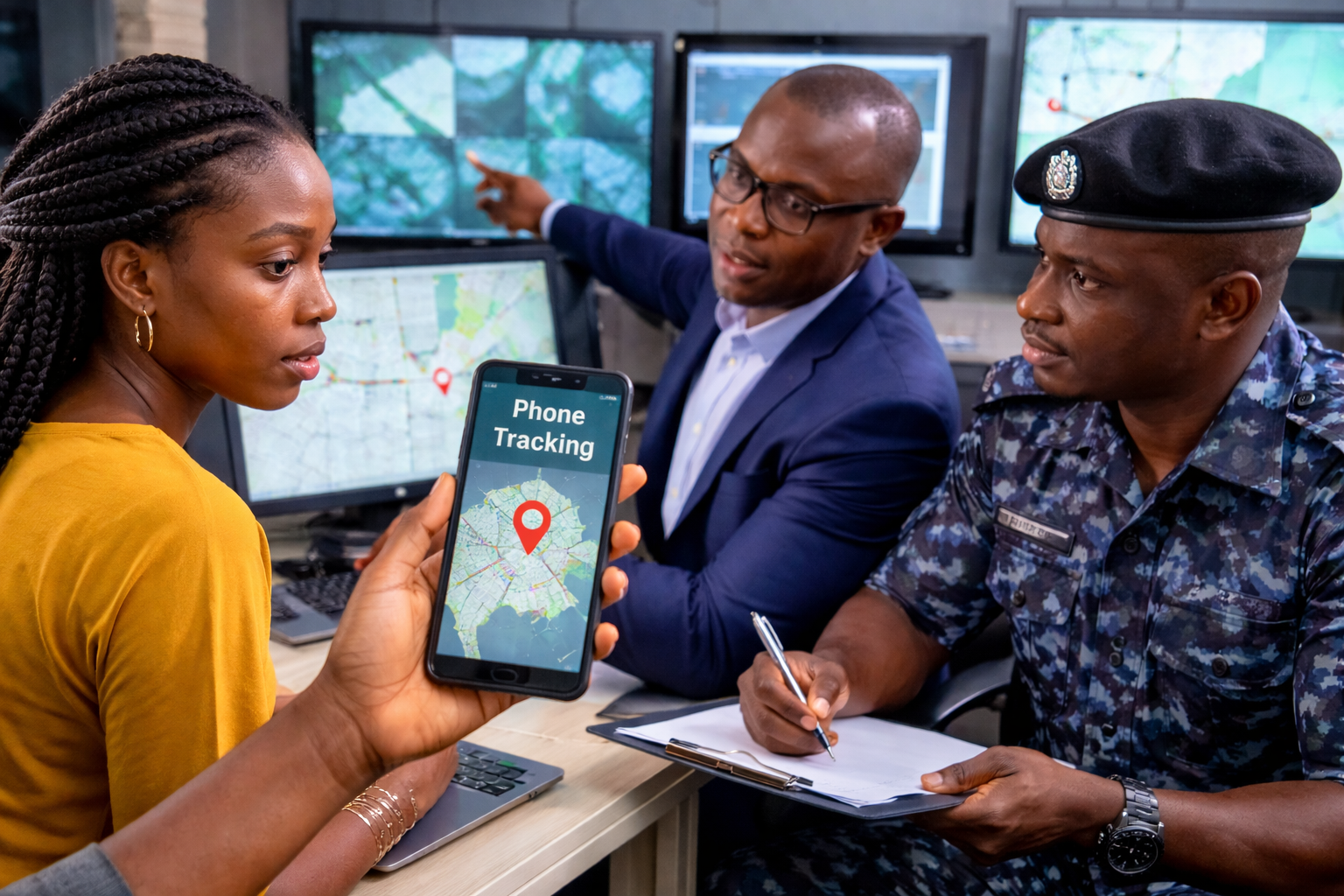
Tracking a stolen phone refers to the lawful process of locating, disabling, or recovering a mobile device after it has been stolen or unlawfully taken, using technological tools, network information, or law enforcement intervention.
It is important to distinguish lawful tracking from illegal surveillance. Tracking your own stolen device using authorised tools or through law enforcement is permitted. Attempting to spy on another person’s device, hack accounts, or access telecom data without legal authority is a criminal offence under Nigerian law.
Legal Framework Governing Phone Tracking in Nigeria
The 1999 Constitution and Right to Privacy
The Nigerian Constitution recognises the right to privacy. Section 37 of the Constitution of the Federal Republic of Nigeria 1999 (as amended) provides that “the privacy of citizens, their homes, correspondence, telephone conversations and telegraphic communications is hereby guaranteed.”
This provision means that phone tracking must respect privacy rights and cannot be done arbitrarily by private individuals. Any intrusion into communication data must be justified by law.
The Cybercrimes (Prohibition, Prevention, etc.) Act
The Cybercrimes Act is one of the most relevant laws when discussing stolen phones. It criminalises unauthorised access to devices, identity theft, electronic fraud, and unlawful interception of communications.
Where a phone is stolen and used to access emails, business files, copyrighted content, or financial applications, multiple offences may arise. Tracking efforts must therefore be routed through lawful channels, especially where telecom data is involved.
Role of Telecommunications Regulation
Telecommunications operators in Nigeria are regulated by the Nigerian Communications Commission (NCC). Network providers are legally restricted from releasing subscriber information or location data to private individuals without lawful authority. This is why police reports and formal requests are critical in phone tracking cases.
Immediate Steps to Take When Your Phone Is Stolen in Ogun State
From a lawyer’s perspective, what you do within the first few hours of phone theft often determines whether recovery is possible and whether further damage can be prevented.
The first step is to secure your digital identity. This includes remotely locking the device, changing passwords linked to emails, cloud storage, banking apps, social media accounts, and work platforms. Many clients underestimate this step and focus solely on physical recovery, only to suffer financial or reputational loss later.
Using Built-In Phone Tracking Tools (Lawfully)
Most modern smartphones come with manufacturer-provided tracking tools. These tools are lawful because they operate based on prior authorisation given by the device owner.
For Android devices, Google’s device management system allows owners to locate, lock, or erase their phones remotely. For Apple devices, the “Find My” feature performs similar functions. These tools rely on the user’s pre-existing login credentials and do not violate Nigerian privacy laws.
In Ogun State, many recovered phones were traced through these tools before being handed over to law enforcement for physical recovery.
The Role of IMEI in Tracking a Stolen Phone
Every mobile phone has a unique International Mobile Equipment Identity (IMEI) number. This number is crucial in reporting and tracking stolen phones.
Once reported, network providers can blacklist the IMEI, rendering the phone unusable on Nigerian networks. While individuals cannot directly track location using IMEI, law enforcement agencies may use it as part of investigation processes.
Reporting to the Police in Ogun State
A critical legal step in tracking a stolen phone is making a formal police report at the nearest police station in Ogun State. This report serves several purposes.
First, it creates an official record of theft. Second, it enables lawful engagement with telecom providers. Third, it protects the victim from liability if the stolen phone is later used for criminal activities.
From experience, many clients skip this step and later struggle when banks, employers, or regulators request evidence that the phone was stolen.
Can the Police Track a Stolen Phone in Nigeria?
Yes, but within legal limits. The police may request assistance from telecom operators where necessary, particularly if the phone is linked to serious offences such as fraud, identity theft, or cybercrime.
However, the police do not track phones for every theft complaint. The seriousness of the case, evidence provided, and public interest considerations often influence investigative priority.
What the Law Does NOT Allow You to Do
One of the most common misunderstandings is the belief that victims can independently track a stolen phone by hiring “experts” or accessing telecom data. This is illegal.
Unauthorised access to call logs, location data, or another person’s device constitutes an offence under Nigerian law. Courts take privacy violations seriously, even where the victim believes they are justified.
Intellectual Property and Business Risks of Phone Theft
From an intellectual property perspective, stolen phones often contain copyrighted materials, trade secrets, confidential client data, designs, manuscripts, software access credentials, and proprietary business information.
Just as intellectual property is protected under statutes such as the Copyright Act, Trademarks Act, and Patents and Designs Act, digital assets stored on devices deserve protection. The theft of a phone can therefore escalate into IP infringement, data breach, or unfair competition issues.
A Lawyer’s View: What Usually Goes Wrong
In practice, many victims focus solely on physical recovery and ignore data protection. Others rely on informal “street tracking” methods that expose them to further legal risk.
Courts and regulators care deeply about lawful process. Even where a phone is stolen, illegal tracking methods can undermine the victim’s case and expose them to criminal liability.
How Long Does Phone Tracking Take in Nigeria?
There is no fixed timeline. Manufacturer-based tracking may produce immediate results if the phone is online. Police-assisted processes may take longer, depending on cooperation from network providers and investigative capacity.
Frequently Asked Questions (FAQs): How to Track a Stolen Phone in Nigeria
Can I track my stolen phone without going to the police?
You may use manufacturer-provided tools, but formal recovery and telecom engagement require police involvement.
Can network providers give me the location of my phone?
No. Nigerian law restricts disclosure of subscriber data without lawful authority.
Is tracking someone else’s phone illegal?
Yes, unless you have legal authority or consent.
What if my phone contains business or client data?
Immediate data protection steps are critical, including password changes and remote wiping.
Can a stolen phone be used as evidence against me?
Without a police report, you may face difficulties distancing yourself from criminal use of the device.
Conclusion: Lawful Tracking Is the Only Safe Approach
Understanding how to track a stolen phone in Nigeria, especially in Ogun State, requires balancing urgency with legality. While technology offers helpful tools, Nigerian law places clear limits on privacy and data access. Acting within the law protects not only your device but also your reputation, finances, and intellectual property.
The safest approach combines immediate digital security actions, lawful tracking tools, and engagement with law enforcement.
Call to Action
If your phone has been stolen and you are concerned about data loss, business exposure, or misuse of intellectual property, seek legal guidance immediately. A qualified Nigerian lawyer can advise on lawful recovery steps, data protection obligations, and risk mitigation strategies.
Nigerian Lawyers Centre remains a trusted platform for legal education and guidance on digital rights, intellectual property protection, and technology-related legal issues in Nigeria. Acting early and lawfully is the most effective way to protect your assets and your rights.
📞For more Enquiry 0806 555 3671, 08096888818, 08024200080
📍 Chaman Law Firm 115, Obafemi Awolowo Way Allen Junction, Beside Lagos Airport Hotel, Ikeja, Lagos
👉 Book a consultation now: www.chamanlawfirm.com/book-consultation
Chaman Law Firm – Your Right, We Protect.
