

Dealing with Land Encroachment: A Guide for Property Owners in Ogun State.
Introduction
Land ownership in Ogun State, and indeed across Nigeria, is a dream that many aspire to achieve. Whether you purchased a plot for personal residence, commercial development, or future investment, protecting that land is of utmost importance. Unfortunately, cases of land encroachment—where another party unlawfully occupies or interferes with part or all of your land—have become increasingly common in Ogun State. These disputes can arise between neighbors, families, estate developers, or even through fraudulent sales by land-grabbers and speculators.
If not handled properly, land encroachment issues can lead to prolonged litigation, financial loss, or even complete loss of property. Therefore, every property owner must understand what land encroachment means, its legal implications, and the appropriate steps to take to protect ownership rights.
This comprehensive guide by Chaman Law Firm, a leading property and real estate law firm in Ogun State and Lagos, will help you understand the causes, prevention, and resolution of land encroachment disputes. It also explains the role of survey plans, title documents, boundary demarcations, and the court system in safeguarding your land ownership rights.
Understanding Land Encroachment
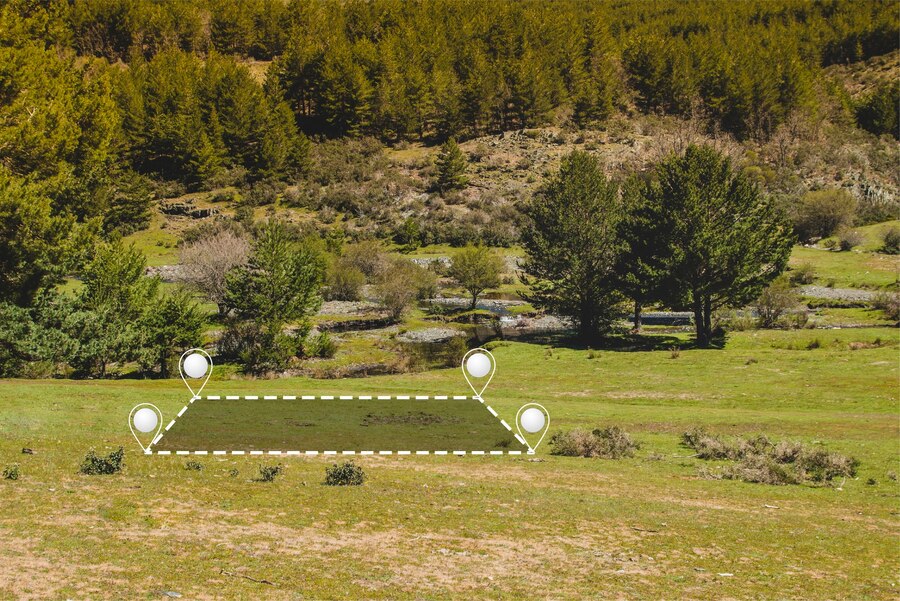
Land encroachment occurs when a person unlawfully extends their property boundary or structure into another person’s land without authorization or legal right. It may involve erecting a fence beyond the rightful boundary, constructing a building on a neighbor’s land, farming or grazing animals across boundary lines, or illegally claiming ownership of another person’s land.
Encroachment is not just a civil issue—it can also amount to trespass and criminal conduct under Ogun State laws and the Nigerian Land Use Act of 1978. It infringes on the legal right of possession and quiet enjoyment guaranteed to every lawful landowner.
Common Causes of Land Encroachment in Ogun State
In Ogun, several factors contribute to recurring encroachment disputes:
-
Unclear or overlapping survey plans – Many lands are sold without accurate or registered surveys, leading to overlapping boundaries.
-
Ignorance of boundary limits – Some buyers fail to verify physical boundaries before construction begins.
-
Fraudulent multiple sales – Unscrupulous landowners or agents may sell the same plot to multiple buyers.
-
Family land disputes – Inherited family lands often suffer from boundary conflicts between branches of the same family.
-
Urban expansion – Rapid development in areas like Arepo, Mowe, Ibafo, Sagamu, and Agbara creates pressure and confusion over land boundaries.
-
Poor land documentation – Absence of Deeds of Assignment, Governor’s Consent, or Certificates of Occupancy (C of O) weakens a buyer’s position during disputes.
Legal Framework Governing Land Ownership and Encroachment in Ogun State
-
Land Use Act of 1978 (LUA)
The Act vests all lands in a state in the Governor, who holds it in trust for the people. It regulates land allocation, acquisition, and use, including rights of occupancy. -
Ogun State Land Bureau Regulations
This local agency is responsible for survey registration, title verification, and land record maintenance within the state. -
Property and Conveyancing Law of Western Nigeria (1959)
This law governs conveyancing, leases, mortgages, and property rights in Ogun and other former Western Region states. -
Criminal Code Law of Ogun State
Provides penalties for willful trespass or unlawful occupation of another person’s property.
Identifying Land Encroachment
You may be dealing with land encroachment if you notice:
-
A neighbor’s fence or building crosses into your land.
-
Someone is farming, parking, or storing materials on your land.
-
Your surveyor’s measurements differ from the beacons on the ground.
-
Unauthorized persons have obtained fake documents over your land.
-
Your boundary markers (beacons) have been tampered with or removed.
Always involve a licensed surveyor to re-confirm your boundaries through re-surveying before making accusations. Proper documentation and survey evidence are essential in court.
First Steps When You Suspect Encroachment
-
Stay Calm and Avoid Violence
Never confront the encroacher aggressively. Physical confrontation can escalate into criminal charges or injury. -
Engage a Licensed Surveyor
Request a boundary re-survey using your original survey plan. This will confirm whether there is actual encroachment. -
Consult a Property Lawyer
A property and real estate lawyer can review your title documents, verify your ownership rights, and recommend the best legal or mediation approach. -
Issue a Formal Demand or Cease-and-Desist Letter
Through your lawyer, send a legal notice to the encroacher demanding cessation and removal from your property. -
Report to Local Authorities or Land Bureau
You may report to the Ogun State Land Bureau or the Ministry of Physical Planning for enforcement if unauthorized structures are involved. -
Initiate Court Action if Necessary
Where the encroacher refuses to vacate, a court order for possession, injunction, or damages may be obtained.
Types of Legal Actions Available to Property Owners
1. Action for Trespass
A property owner in lawful possession may sue any person who unlawfully enters or occupies their land. The owner may claim damages and a perpetual injunction restraining further interference.
2. Action for Declaration of Title
This is a formal request asking the court to declare you as the rightful owner. You must prove your title through documents such as Deed of Assignment, Certificate of Occupancy, or long possession.
3. Action for Injunction
An injunction restrains the encroacher from continuing to occupy, build, or interfere with your land.
4. Action for Recovery of Possession
You can apply for an order compelling the encroacher to vacate your land and restore it to its original state.
5. Petition for Criminal Trespass
In severe cases, where the encroachment is deliberate and forceful, you can petition the police or the Attorney-General for prosecution under the Criminal Code.
Evidence Required in Encroachment Disputes
-
Original title documents (Deed of Assignment, C of O, or Registered Survey)
-
Evidence of payment for land purchase
-
Survey plan and beacon coordinates
-
Boundary witnesses (neighbors, community leaders)
-
Photographs and videos showing encroachment
-
Correspondence (letters, receipts, legal notices)
Alternative Dispute Resolution (ADR) Options
Ogun State courts encourage amicable resolution through mediation or arbitration before litigation. Property owners may:
-
Approach the Ogun Multi-Door Courthouse (OMDC) for mediation.
-
Engage community elders or family heads for settlement.
-
Appoint a Chartered Mediator or Arbitrator (like members of AICMC or CIArb).
-
Use arbitration clauses if the land sale contract provided for it.
ADR saves time, money, and relationships compared to litigation.
Case Study: A Boundary Dispute in Arepo, Ogun State
In 2021, a property developer in Arepo purchased a 2-plot parcel from a recognized family. Years later, a neighboring developer extended his fence, overlapping about 15 feet into the plaintiff’s land. The plaintiff engaged a surveyor who confirmed encroachment using GPS coordinates.
A cease-and-desist letter was served, but the encroacher ignored it. The matter went to the Ogun State High Court, Abeokuta Division. After evidence and cross-examination, the court ruled in favor of the plaintiff, ordered the removal of the illegal fence, and awarded damages of ₦2 million.
This case highlights the importance of documentation and professional legal support.
Preventive Measures Against Land Encroachment
-
Conduct Comprehensive Due Diligence before purchase.
-
Ensure your survey plan is registered with the Surveyor-General of Ogun State.
-
Always fence and mark your boundaries after purchase.
-
Display ownership signboards (“This land belongs to [Your Name]”).
-
Maintain copies of your documents securely.
-
Register your Deed of Assignment and obtain Governor’s Consent.
-
Periodically visit and inspect undeveloped lands.
-
Avoid buying lands without verifiable family representatives or layout plans.
Government Agencies That Handle Land Disputes in Ogun
-
Ogun State Bureau of Lands and Survey
-
Ogun State Ministry of Physical Planning and Urban Development
-
Ogun State Judiciary – Land and Property Division
-
Nigeria Police (Property Fraud Unit)
-
Ogun State Geographic Information System (OGGIS)
Each plays a role in registration, enforcement, or resolution of land conflicts.
Role of a Property Lawyer in Land Encroachment Cases
A property lawyer helps to:
-
Verify the authenticity of your documents.
-
Represent you in negotiations or court proceedings.
-
Draft and serve demand notices or court pleadings.
-
Liaise with surveyors, government offices, and police.
-
Protect your interest legally and ensure full restitution.
At Chaman Law Firm, we specialize in land dispute resolution, real estate transactions, and due diligence for individuals and developers in Ogun State and Lagos.
Consequences of Ignoring Encroachment
Failure to act quickly can lead to:
-
Loss of property rights through adverse possession.
-
Destruction or alteration of property boundaries.
-
Permanent damage to your development plan.
-
Financial losses and costly litigation.
-
Emotional stress and community disputes.
Prompt action, legal consultation, and documentation are your strongest defenses.
Frequently Asked Questions (FAQs)
Q1: What should I do if my neighbor builds on my land in Ogun?
Engage a surveyor to confirm boundaries, then consult a lawyer to issue a formal notice and possibly seek injunction or possession order.
Q2: Can I demolish an encroaching fence myself?
No. You must first obtain a court order. Self-help could expose you to criminal liability.
Q3: Can encroachment be resolved without going to court?
Yes. Mediation or negotiation through community elders, land bureau, or ADR center is encouraged.
Q4: What if my land documents are not registered?
You still have an equitable interest, but registration gives you a stronger legal right. Register your documents immediately.
Q5: How long does an encroachment case take in court?
Depending on complexity and evidence, it may take months or a few years. Using ADR can shorten the process.
Q6: Can I sue a family for encroaching on my land?
Yes, provided you can prove lawful ownership and boundaries.
Final Thoughts
Land encroachment is one of the most frequent yet avoidable land disputes in Ogun State. Every property owner must be proactive about documentation, survey accuracy, and legal protection. Ignorance or delay can lead to irreversible loss.
The key takeaway is to act immediately once you suspect encroachment—by verifying with a surveyor, consulting a lawyer, and following due process.
Call to Action
Protect your land investment today.
If you suspect any form of land encroachment, do not ignore it.
