

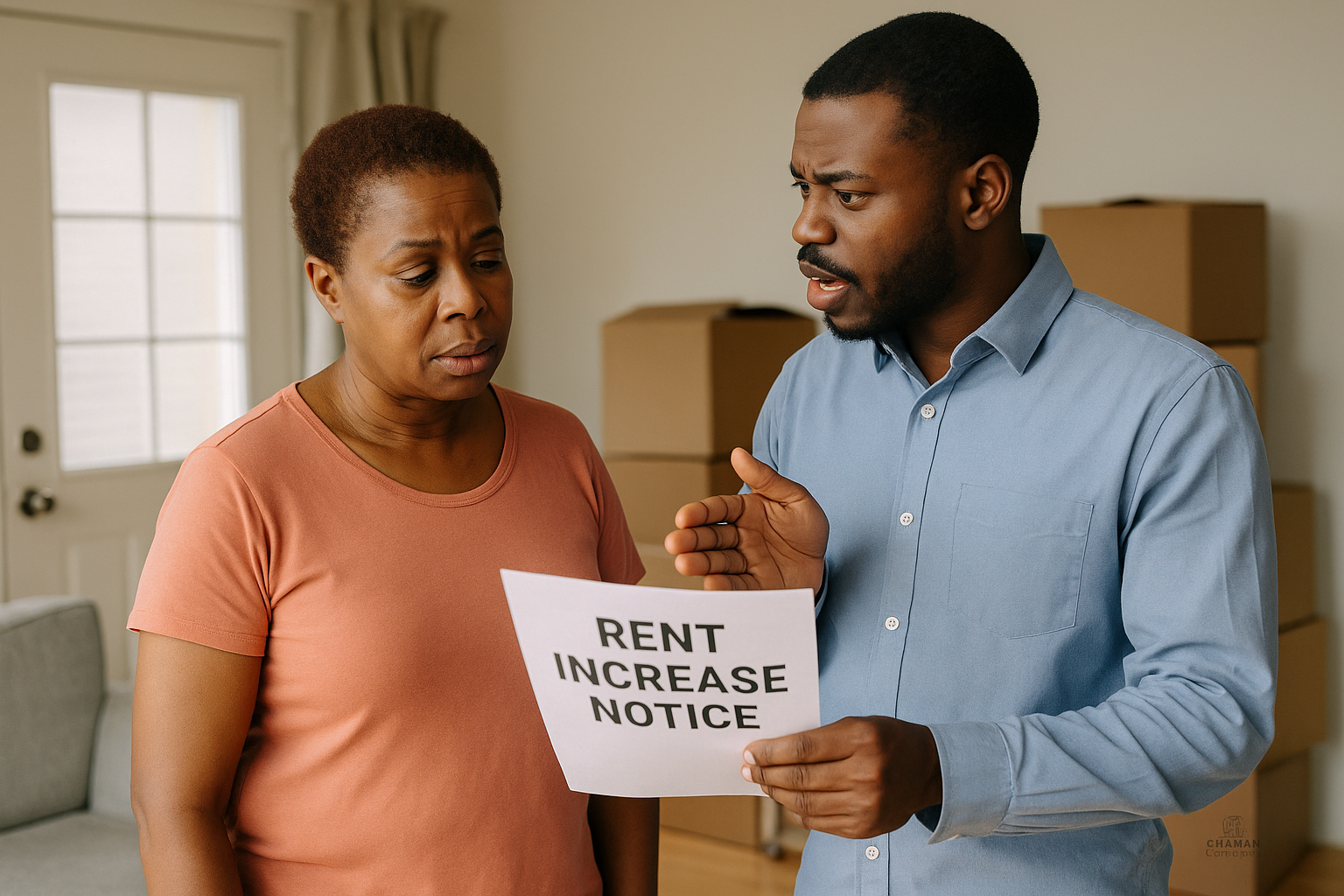
Can a Landlord Increase Rent Arbitrarily in Ogun State
Introduction
Rent increment is one of the most sensitive and controversial issues between landlords and tenants in Nigeria, particularly in fast-developing regions like Ogun State. With urban expansion along the Lagos–Ibadan Expressway corridor, rising construction costs, and increasing demand for housing, many landlords seek to review rent upward — sometimes abruptly or without adequate notice. Tenants, on the other hand, often feel exploited or unfairly burdened when rent hikes appear sudden or excessive.
The central legal question is: Can a landlord increase rent arbitrarily in Ogun State?
The short answer is no — rent cannot be increased arbitrarily or unreasonably. While landlords have the right to earn fair returns on their property, the law in Ogun State, like most Nigerian jurisdictions, imposes restrictions, fairness obligations, and procedural safeguards to protect tenants from unfair exploitation.
This article offers a deep, practical, and legal guide to understanding rent increases in Ogun State — what is permissible, what is arbitrary, what the law says, and how both landlords and tenants can handle rent review issues lawfully and peacefully.
1. Understanding Rent Control and Tenancy Regulation in Nigeria
1.1 The Legal Framework
In Nigeria, landlord–tenant relationships are primarily governed by:
-
The tenancy or lease agreement between the parties.
-
State tenancy laws (e.g., Recovery of Premises Laws, Rent Control Laws).
-
Common law and equity principles, inherited from English law.
-
Court precedents interpreting fairness, notice, and due process.
Each state, including Ogun, has the power to legislate on tenancy issues. Although Ogun State does not have a widely published Tenancy Law like Lagos State’s 2011 law, its Recovery of Premises Law (Cap 125, Laws of Ogun State) and general principles of contract and fairness guide rent increase and recovery matters.
Therefore, landlords cannot act outside the boundaries of written agreements, statutory provisions, or judicially-accepted reasonableness.
2. What Does “Arbitrary Rent Increase” Mean?
An arbitrary rent increase is one made without notice, without agreement, without reasonableness, or outside legal procedure.
It may take forms such as:
-
A sudden rent hike without notifying the tenant.
-
Increasing rent mid-term (before expiry of current tenancy).
-
Raising rent by an excessive or discriminatory amount.
-
Increasing rent to punish a tenant for complaints or disputes.
Such actions violate principles of fair dealing and, in many cases, amount to constructive eviction or breach of tenancy contract.
3. Contractual Basis of Rent in Ogun State
3.1 Tenancy Agreement as the First Law
Every rent relationship begins with a tenancy agreement — a written or oral contract specifying the rent, duration, and review mechanisms. The agreement is binding on both parties.
If the agreement provides for rent review (e.g., “Rent may be reviewed after 12 months with 30 days’ notice”), then the landlord can increase rent according to that clause, provided he complies with the notice period and review terms.
If there is no clause on rent review, or the agreement has expired, the landlord must follow statutory procedure and reasonableness standards before implementing any increase.
3.2 The Role of Consideration and Mutual Consent
Under contract law, rent is consideration — payment for use of the property. The landlord cannot unilaterally change the consideration mid-contract; both parties must consent or the contract must terminate. This means that if the landlord wishes to charge higher rent, he must terminate the old tenancy (with proper notice) and offer renewal at the new rate. The tenant can either accept or vacate.
4. Ogun State Legal Position on Rent Increase
Although Ogun State has not enacted a stand-alone “Tenancy Law” like Lagos, rent increase disputes are addressed under:
-
Recovery of Premises Law, Cap 125, Laws of Ogun State – regulating notice, possession, and fairness.
-
Landlord and Tenant (Common Law) principles – requiring notice and mutual consent for new rent.
-
Case law precedents – emphasizing fairness, reasonable notice, and avoidance of arbitrary increments.
4.1 Key Principles from Ogun’s Practice
-
A landlord cannot increase rent within the subsisting tenancy period unless the agreement allows it.
-
Rent increase must be preceded by proper notice — often aligned with the tenancy period (monthly, quarterly, yearly).
-
Rent increase must be reasonable in light of market realities, inflation, and property value.
-
A tenant may refuse a proposed rent hike if it is excessive or procedurally defective.
-
Disputes should be resolved through negotiation, mediation, or court intervention, not self-help.
5. Notice Requirements Before Rent Increase
5.1 The General Rule
Rent cannot be validly increased without adequate written notice to the tenant. The required notice period depends on the nature of the tenancy.
Typical practice under the Recovery of Premises framework is:
| Type of Tenancy | Minimum Notice to Quit / Adjust Terms |
|---|---|
| Yearly tenancy | 6 months |
| Half-yearly tenancy | 3 months |
| Quarterly tenancy | 3 months |
| Monthly tenancy | 1 month |
While this table reflects common practice, Ogun courts generally apply the “reasonable notice” test — the notice must be fair, allowing the tenant sufficient time to adjust or relocate.
5.2 Components of a Valid Rent Increase Notice
A valid notice should:
-
Be in writing, dated, and signed by the landlord or agent.
-
State the current rent, proposed rent, and effective date.
-
Specify that it serves as notice for renewal at the higher rate.
-
Be properly served on the tenant (by hand, post, or as agreed).
-
Allow reasonable time for the tenant to decide.
Failure to meet these elements may render the rent increase void or unenforceable.
6. Limits to a Landlord’s Right to Increase Rent
6.1 Contractual Limits
If the tenancy agreement fixes rent for a defined term (e.g., one year), the landlord cannot increase rent until that term expires. Any attempt to do so mid-term violates the contract.
6.2 Statutory Limits
Under the Recovery of Premises Law (Ogun) and general equitable doctrine, landlords must not impose unfair or oppressive rent. Courts will not enforce exorbitant increases that amount to exploitation.
6.3 Reasonableness and Market Standard
Even in the absence of statutory caps, rent increases must be reasonable. Courts consider:
-
The prevailing market rent in similar locations.
-
The condition of the property and improvements made.
-
Inflation and cost-of-living indices.
-
The tenant’s ability to find alternative accommodation within a fair timeframe.
6.4 Procedural Fairness
Rent increase cannot take effect until after valid notice and mutual consent. If a landlord attempts to enforce new rent by intimidation, harassment, or disconnection of utilities, the act may constitute constructive eviction and attract legal penalties.
7. When Does Rent Increase Become Arbitrary or Illegal?
A rent increase becomes arbitrary or illegal when it meets one or more of these criteria:
-
No prior notice was given to the tenant.
-
Increase was done mid-term, contrary to the lease.
-
Rent doubled or tripled without justification.
-
Tenant was coerced or harassed into paying higher rent.
-
Utilities were disconnected to force acceptance.
-
Rent increment violated state rent control policies.
-
No written record of rent adjustment exists.
Courts in Nigeria have repeatedly condemned such arbitrary actions as unreasonable, unconscionable, and unenforceable.
8. Remedies Available to Tenants
If a landlord increases rent arbitrarily in Ogun State, the tenant can pursue several remedies:
8.1 Negotiation or Mediation
Tenants can first open dialogue or mediation, possibly through local government tenancy offices or professional mediators (e.g., Chaman Law Firm’s ADR section).
8.2 Complaint to Rent Tribunal or Court
If negotiation fails, the tenant may file a complaint in the Magistrate Court under the Recovery of Premises Law or seek declaratory relief in the High Court. Reliefs may include:
-
Declaration that rent increase is unlawful.
-
Injunction restraining landlord from enforcing increase.
-
Refund or adjustment of overpaid sums.
-
Damages for harassment or constructive eviction.
8.3 Constructive Eviction Claims
If the landlord uses force, disconnection, or intimidation to compel rent increase, the tenant can claim damages for illegal eviction.
8.4 Report to Regulatory or Professional Bodies
Tenants can also lodge reports with local government housing departments or estate agents’ associations against unscrupulous practices.
9. Rights and Options of the Landlord
Landlords are not without rights. Ogun law recognizes their legitimate interest to earn fair returns. The key is to exercise those rights lawfully and reasonably.
9.1 Right to Rent Review
A landlord may:
-
Review rent after expiry of the tenancy term.
-
Propose new rent via formal notice.
-
Negotiate with tenant for renewal at revised rate.
9.2 Right to Terminate and Offer New Tenancy
If a tenant rejects the new rent, the landlord can serve a Notice to Quit (per tenancy type) and a Notice of Intention to Recover Possession, then offer the property to another tenant at market rate — all through legal means.
9.3 Right to Market-Based Adjustment
Courts will not punish landlords for fair, market-driven rent adjustments — provided they follow due process and notice rules.
10. Procedure for Lawful Rent Increase in Ogun State
To avoid disputes, landlords should follow these procedural steps:
-
Review tenancy agreement for rent-review clause.
-
Determine renewal period — usually upon tenancy expiration.
-
Evaluate market rent for similar properties.
-
Serve written notice of proposed increase, stating:
-
Current and new rent amount.
-
Effective date.
-
Notice period (e.g., 3–6 months).
-
-
Serve properly on the tenant (registered mail, personal delivery, or as provided in the lease).
-
Negotiate if the tenant objects; consider phased increment.
-
Document acceptance — have tenant sign rent review acknowledgment.
-
If the tenant rejects and refuses to vacate, serve notice to quit and follow due process for recovery.
This structure demonstrates fairness and compliance, ensuring enforceability.
11. Judicial Approach to Rent Increase Disputes
Nigerian courts generally adopt a fairness and reasonableness test. Some illustrative principles:
-
In Oyekanmi v. NEPA (2000), the court held that rent increment during a subsisting tenancy without tenant’s consent was invalid.
-
In Ayinke v. Lawal (2011), the court reiterated that rent review clauses must be clear, and tenants must be given adequate notice.
-
In Akinbade v. Babatunde (2018), the court emphasized that rent increase cannot take retrospective effect.
Although these cases may not originate from Ogun specifically, they apply equally under Nigeria’s uniform common-law tenancy principles.
12. Practical Guidelines for Tenants and Landlords in Ogun State
12.1 For Landlords
-
Always include a clear rent-review clause in your tenancy agreements.
-
Give adequate written notice before implementing an increase.
-
Avoid harassment, threats, or disconnection of utilities.
-
Consider graduated increments (e.g., 10–15%) in high-inflation periods.
-
Seek legal advice before issuing new rent demands.
12.2 For Tenants
-
Keep copies of all rent receipts and agreements.
-
Request rent increase notices in writing.
-
Verify that the notice complies with law and your tenancy term.
-
Seek negotiation or legal counsel before reacting emotionally.
-
Do not stop paying rent abruptly — continue paying the old rate pending resolution.
12.3 For Both Parties
-
Maintain open communication and documentation.
-
Engage mediators or legal counsel early to prevent escalation.
-
Always act within lawful notice and consent frameworks.
13. Common Mistakes to Avoid
13.1 Landlords
-
Raising rent mid-term without notice.
-
Discriminatory or punitive rent increases.
-
Oral notice without proof of service.
-
Threatening eviction or cutting electricity/water.
-
Ignoring legal counsel and relying on informal agents.
13.2 Tenants
-
Ignoring notices and assuming illegality without verification.
-
Defaulting on existing rent due to disagreement.
-
Damaging property or refusing inspection.
-
Spreading misinformation that worsens conflict.
Avoiding these errors keeps relationships professional and disputes manageable.
14. Role of Alternative Dispute Resolution (ADR)
ADR mechanisms such as mediation and arbitration are highly encouraged in rent disputes in Ogun State.
-
Mediation allows neutral third-party facilitation for peaceful resolution.
-
Arbitration is faster than litigation and produces binding awards.
At Chaman Law Firm, our trained mediators and chartered arbitrators help landlords and tenants negotiate rent reviews amicably, preserving long-term relationships and avoiding unnecessary litigation.
15. Tax and Compliance Implications
Rent increments affect not only landlords and tenants but also tax obligations.
-
Withholding Tax: Tenants paying rent to corporate landlords must deduct and remit to the tax authority.
-
Stamp Duty: Rent agreements (new or renewed) must be stamped for legal enforceability.
-
Income Tax: Landlords must declare increased rental income.
-
Tenement Rates: May also adjust upward following rent increase or property value change.
Compliance ensures transparency and avoids penalties.
16. Social and Economic Realities Behind Rent Increase
In Ogun State, rapid urbanization — especially in areas like Arepo, Mowe, Ibafo, and Abeokuta — drives landlords to review rents frequently. Inflation, materials cost, and maintenance challenges justify moderate increases. However, these pressures do not excuse lawless or arbitrary actions.
The balance must always tilt toward fair compensation for landlords and reasonable protection for tenants. Only legal compliance preserves that balance.
17. Enforcement and Remedies When Tenants Refuse New Rent
If a tenant refuses to pay revised rent after due notice and expiration of the tenancy:
-
Serve a Notice to Quit under the Recovery of Premises Law.
-
After expiration, serve a Notice of Owner’s Intention to Recover Possession (7 days).
-
File an action for recovery of possession, arrears, and mesne profits in court.
-
Execute judgment through bailiffs, never self-help.
This formal process transforms potential conflict into a lawful recovery, avoiding police harassment or illegal eviction claims.
18. Frequently Asked Questions (FAQ)
1. Can a landlord increase rent at any time?
No. In Ogun State, rent can only be increased after the tenancy term expires or as permitted by agreement, with reasonable written notice.
2. What is a “reasonable notice” for rent increase?
Usually between 3–6 months, depending on tenancy type and custom.
3. Can a tenant refuse to pay the new rent?
Yes, if it was arbitrarily imposed or lacks proper notice. The tenant may continue paying the old rent until lawful review or court determination.
4. Can rent be increased for ongoing tenancy?
Not without a valid rent-review clause allowing it mid-term.
5. Are there penalties for illegal rent increase?
Yes. Courts can void the increment, award damages, and restrain the landlord from further harassment.
6. Is there rent control in Ogun State?
There’s no active rent-control board, but the principles of fairness and statutory procedure effectively regulate rent increases.
7. How can disputes be resolved quickly?
Through negotiation, mediation, or legal consultation with property law experts like Chaman Law Firm.
19. Conclusion
Rent increase is a normal feature of property management — but it must follow lawful, reasonable, and procedural safeguards. Ogun State’s tenancy framework and the courts frown at arbitrary increases that shock tenants or violate notice requirements.
Landlords must act fairly and give adequate notice; tenants must respond responsibly and avoid default. The golden rule remains: mutual respect and adherence to the law.
By following the guidance outlined here, landlords can lawfully adjust rent to reflect economic realities, and tenants can safeguard their rights while maintaining healthy tenancy relationships.
Call to Action
Protect your rights and investments through lawful rent procedures. Whether you are a landlord seeking to increase rent, or a tenant facing arbitrary rent demands, you deserve professional legal guidance.
At Chaman Law Firm, we provide expert advisory, documentation, and representation in all tenancy and property-related matters across Ogun and Lagos States.
📞 0806 555 3671, 08096888818, 08024200080 📧 chamanlawfirm@gmail.com 📍 Chaman Law Firm 115, Obafemi Awolowo Way,Allen Junction, Beside Lagos Airport Hotel, Ikeja, Lagos 🌐 www.chamanlawfirm.com 👉 Book a consultation now: www.chamanlawfirm.com/book-consultation Chaman Law Firm – Your Right, We Protect.